Thursday, August 20, 2015

Was / Were

Let's review the verb to be in the past.
Check this information...


A Few vs. A Little

Sometimes using a few and a little can be quite confusing. Check these examples...


Friday, November 1, 2013

Grammar PowerPoints

Good morning!!
These are some grammar files.
Have fun.


Enjoy!!


Picture Dictionaries

Good morning, everyone!!
Here I leave you some picture dictionaries.


I hope you find them useful...


Friday, December 14, 2012

Stative Verbs

  STATIVE VERBS.
VERBS NOT NORMALLY USED IN CONTINUOUS TENSES.
Appreciate
Like
Recognize
Appear
Be
Love
Remember
Hear*
Believe
Mean*
Think*
Look
Consider*
Mind
Understand
See*
Dislike
Miss
Want*
Seem
Hate
Need
Forget
Smell
Have*
Cost
Own
Taste
Know
Prefer
Belong to
Sound
Possess


Do


Let's check a list using "Do". It will prove useful.


Monday, November 26, 2012

Articles


ARTICLES
Are words used before nouns to denote that they are definite or indefinite.

Adverbs


ADVERBS

Adverbs are words used to describe verbs, adjectives and other adverbs.

Adjectives


ADJECTIVES
Adjectives are words that describe the characteristics of nouns.

Wednesday, October 24, 2012

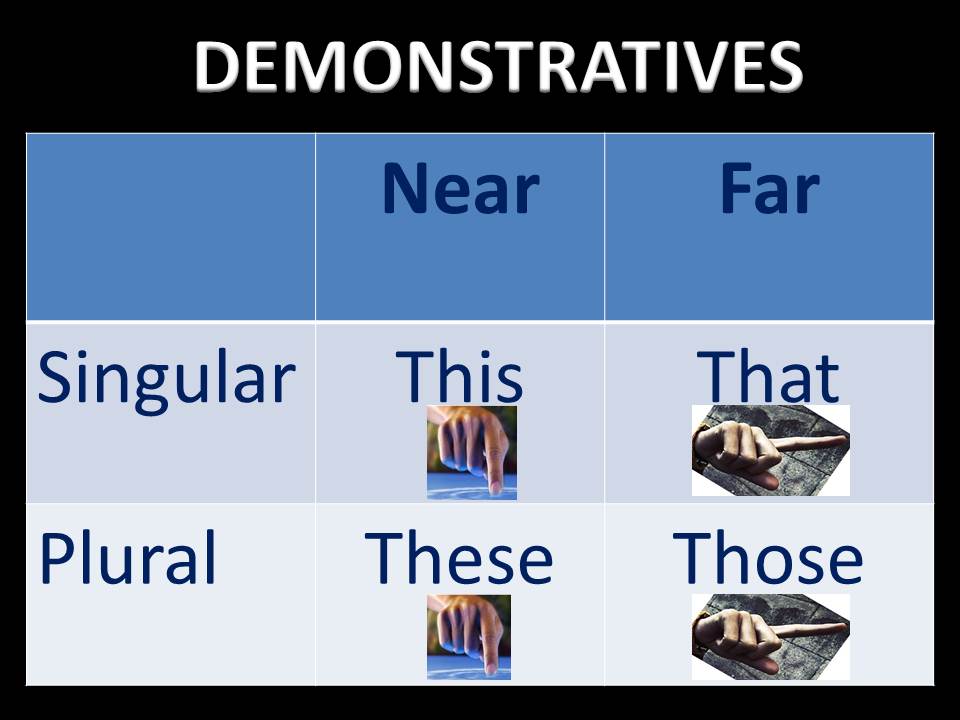
Demonstratives.


Hello!!
This time I bring you demonstratives. I hope they're helpful.

Sunday, October 14, 2012

PHRASAL VERBS


Hello!!
Here I bring you some very useful phrasal verbs with definitions and examples. I know that phrasal verbs can be a headache, but
I guess this will help you a lot. Take a look.

Dangling Modifiers


Dangling Modifiers:
"Always suspect an -ing word of dangling if it's near the front of a sentence; consider it guilty until proved innocent." --Patricia O'Connor

Sunday, October 7, 2012

Hyphenated Constructions - List


Hello!!
Here I bring you a list of hyphenated constructions because someone requested it. 
I'll bring an explanation in the next post.


Wednesday, October 3, 2012

Be to


How can I use "be to"? I have seen it in examples such as,

  • You are not to smoke in here.
  • They are to be married soon.


Sunday, September 23, 2012

Do you ever...?


Do you ever...? (¿Alguna vez comes carne? / ¿Alguna vez vistes de negro? etc)

Here I leave you some examples.